Comprehensive Guide to the Services Supplied in Polished Concrete Flooring Setup
Polished concrete flooring installation includes numerous key services that add to a resilient and aesthetically attractive surface. The procedure begins with careful surface area preparation, guaranteeing the concrete piece is clean and without imperfections. Following this, grinding and honing strategies are used to achieve a smooth surface. The journey does not finish there. Recognizing the different choices for tinting, sealing, and maintenance can considerably affect the outcome and long life of the floor covering.
Surface Area Prep Work Strategies
Before installing polished concrete floor covering, correct surface area preparation is vital to ensure a sturdy and aesthetically pleasing finish. This first stage includes several important steps that validate the substrate appropriates for the overlay. First, any kind of existing flooring coverings, such as carpet or floor tile, should be eliminated to reveal the concrete piece. Next, the surface should be thoroughly cleaned up to remove dust, grease, and other pollutants that could hinder bond
Additionally, assessing the problem of the concrete is important; splits, flaws, and surface irregularities need to be attended to. This may consist of patching or progressing to develop an uniform base. Dampness screening is additionally advised, as excess wetness can bring about future difficulties. Finally, applying a primer can boost adhesion in between the concrete and the brightened coating. By adhering to these surface preparation methods, the long life and look of the polished concrete floor covering are greatly boosted.
Grinding and Refining Procedures
As soon as the surface preparation is total, the grinding and developing procedures play an essential function in achieving a top notch polished concrete surface. Grinding entails using specialized diamond-embedded tools to eliminate any type of surface area blemishes and accomplish a level surface area. This procedure is essential for subjecting the concrete aggregate, which adds to the flooring's visual charm.
Sharpening follows grinding and entails finer diamonds to produce a smoother surface area. This phase improves the concrete's look and prepares it for succeeding sprucing up. The grit degrees used during refining are meticulously selected to guarantee a polished surface without jeopardizing the honesty of the concrete.
Both grinding and sharpening need experienced operators who recognize the nuances of the concrete surface area and can readjust techniques according to specific job requirements. Proper execution of these processes greatly impacts the resilience and aesthetic quality of the final polished concrete floor.
Brightening Methods and Equipment
Several effective brightening methods and specialized equipment are made use of to accomplish a high-gloss coating on concrete floors. The most typical technique entails using diamond polishing pads, which are readily available in varying grits. These pads are mounted on flooring brightening equipments that methodically grind the surface area to the wanted shine.
Wet polishing is preferred for its ability to decrease dirt and decrease heat, while completely dry sprucing up is favored for its performance in smaller rooms. In addition, worldly flooring grinders are typically utilized as they offer even stress and rate, ensuring consistent outcomes.
Advanced devices might include automatic or remote-controlled machines, which enhance efficiency and reduce labor intensity. Ultimately, selecting the suitable brightening technique and tools is necessary for attaining the preferred surface and resilience of the polished concrete flooring, accommodating both visual choices and useful requirements.
Coloring and Discoloring Choices
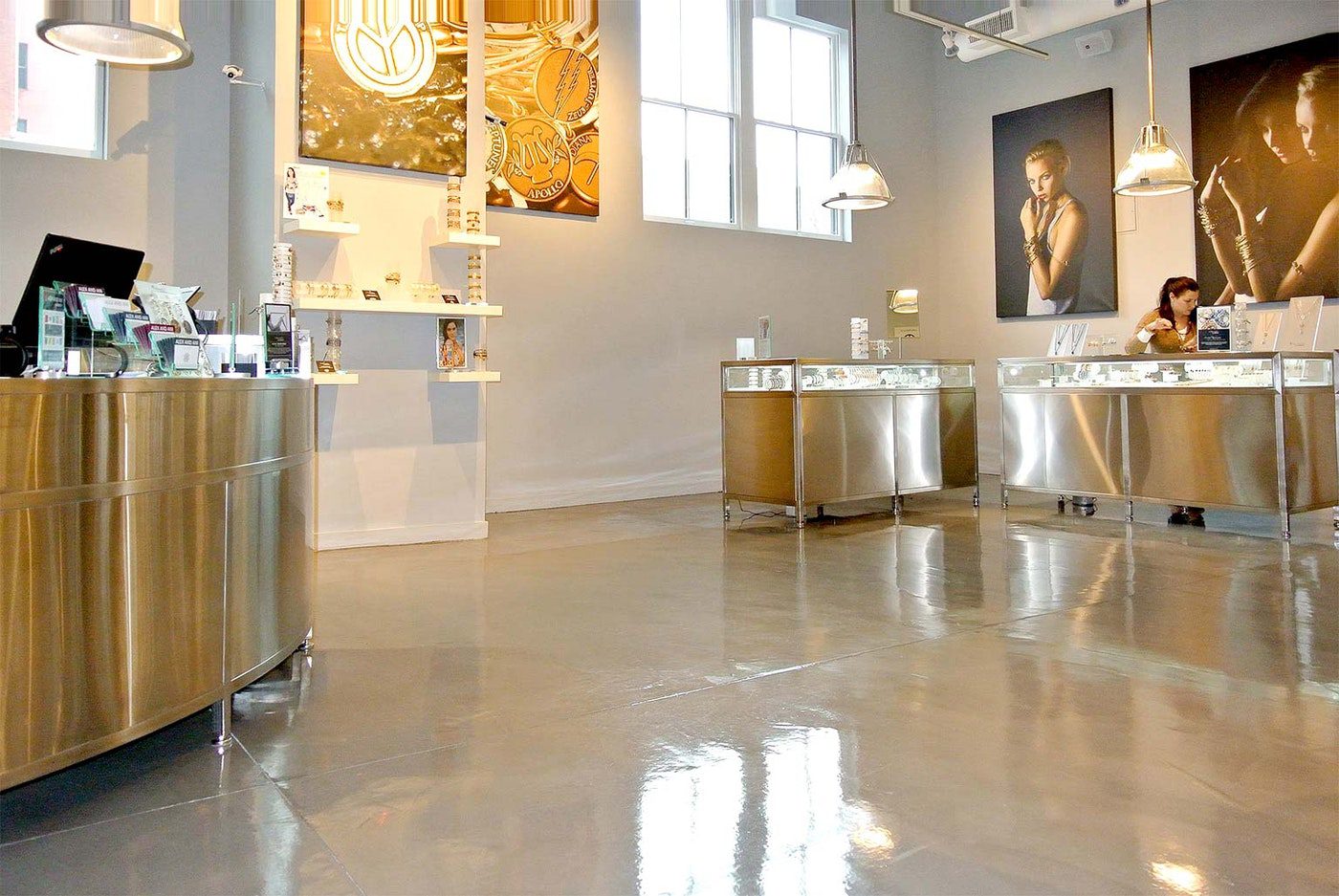
Discoloring Methods Summary
Checking out different staining techniques can significantly boost the aesthetic allure of polished concrete floor covering. Discoloring alternatives fall into 2 primary classifications: acid-based and water-based spots. Acid stains respond chemically with the concrete, creating rich, variegated colors that mimic all-natural stone. They pass through deeply, leading to a long lasting coating. In contrast, water-based stains provide a broader spectrum of shades and are much easier to apply, supplying an extra uniform look. Furthermore, concrete dyes can accomplish dynamic hues and are often utilized together with discolorations for added depth. Each strategy can considerably change the aesthetic characteristics of the surface, permitting modification that meets specific style preferences while ensuring a distinct, advanced search in any room.
Color Options Available
A diverse palette of shade alternatives is available for boosting polished concrete floor covering through discoloration and dyeing strategies. These methods permit a series of colors, from natural tones to vibrant tones, providing house owners and businesses the flexibility to match their aesthetic choices. Acid-based stains respond chemically with the concrete, producing a variegated look that simulates natural rock. On the other hand, water-based discolorations provide an extra uniform color and are offered in a wider series of hues - Polished Concrete Floors Austin Tx. Dyes can also be used to attain vibrant, intense colors, permitting elaborate layouts and patterns. Each option adds to the general result and longevity of the floor covering, making shade choice a crucial factor to consider in polished concrete setup
Personalization and Effects
While considering polished concrete flooring, personalization alternatives for tinting and tarnishing play an important duty in attaining unique visual appeals. Homeowners and organizations can pick from a varied scheme of shades, enabling tailored layouts that match their details tastes and settings. Tarnishing methods, consisting of acid and water-based alternatives, enhance the all-natural charm of concrete while giving a resilient coating. Acid discolorations produce rich, variegated hues, while water-based spots provide a wider variety of shades and are extra environmentally pleasant. Furthermore, decorative results such as metal surfaces or shade overlays can include depth and visual passion. This degree of modification guarantees that polished concrete floor covering not just meets functional requirements however likewise enhances the total layout vision of the area.
Securing and Shielding the Surface
Securing polished concrete is essential for enhancing toughness and preventing damages from stains and dampness. Various kinds of sealants are available, each offering special benefits and defense levels. Comprehending these choices is crucial for maintaining the stability and appearance of the floor covering.
Importance of Securing
The longevity and aesthetic allure of polished concrete floor covering greatly depend upon the application of a top quality sealer - Polished Concrete Floors Austin Tx. Sealing offers numerous functions, primarily shielding the surface from spots, wetness, and abrasion. By forming a barrier, sealers prevent the penetration of fluids and chemicals, which can create discoloration and deterioration with time. This safety layer also enhances the sparkle and aesthetic deepness of the concrete, adding to its overall beauty. In addition, proper sealing lowers maintenance demands, making it simpler to cleanse and keep the flooring's appearance. Regularly sealed concrete floors show improved resilience, guaranteeing they withstand hefty foot website traffic and withstand wear. Eventually, sealing is a crucial action that significantly affects the performance and lifespan of polished concrete floor covering
Types of Sealers
Selecting the right kind of sealant is crucial for protecting the integrity and appearance of polished concrete floor covering. There are mainly 2 categories of sealants: permeating sealers and topical sealants. Permeating sealants, commonly silicone or silane-based, infiltrate the concrete, providing defense against wetness and discolorations while allowing the surface area to breathe. On the other hand, topical sealers, such as acrylic or epoxy, create a protective film externally, improving gloss and shade while supplying a barrier against wear and chemicals. Each kind has its advantages; permeating sealants are suitable for high-traffic locations, while topical sealants offer an even more visual coating. Inevitably, the option of sealer depends upon the particular demands and planned use of the polished concrete floor covering.
Upkeep and Look After Polished Concrete
Proper upkeep and treatment are vital for extending the lifespan and appeal of polished concrete floor covering. Normal cleansing is a key requirement; using a pH-neutral cleaner and a microfiber mop will effectively eliminate dirt and gunk without damaging the surface area. Prevent using extreme chemicals that can boring the coating.

Dusting and sweeping should take place frequently to stop scrapes my website triggered by debris. Using furniture pads can additionally minimize potential damages from hefty items.
Lastly, periodic specialist upkeep can assist determine any issues early and restore the surface area to its initial radiance. By sticking to these treatment standards, polished concrete flooring can continue to be an attractive and sturdy selection for several years to come.
Cost Considerations and Budgeting Tips
While preparing for polished concrete flooring setup, it's important to evaluate numerous expense variables that can impact the total spending plan. The main expenses consist of materials, labor, and any kind of needed site prep work. The type of coating selected-- such as matte, gloss, or attractive-- also greatly influences prices. Furthermore, the dimension and condition of the area will impact both the quantity of concrete required and the intricacy of the installment.
To handle expenses properly, obtaining several quotes from contractors is suggested. This enables contrasts of services and rates. House owners ought to also take into consideration hidden expenses, such as possible repairs to existing flooring or the requirement for customized tools, which can include in the general expense.
Establishing aside a contingency fund for unforeseen expenditures can better guarantee monetary preparedness. By taking these budgeting ideas into account, one can accomplish a refined concrete flooring that fulfills visual and useful needs without exceeding the budget.
Often Asked Concerns
How much time Does the Entire Installment Refine Take?
The installment procedure period can differ based upon task dimension and intricacy. Generally, it ranges from a few days to a week, integrating surface area preparation, grinding, polishing, and sealing stages for optimal lead to polished concrete floor covering.
Can Polished Concrete Be Mounted Outdoors?
Polished concrete can without a doubt be mounted outdoors, as it offers resilience and aesthetic charm. Nevertheless, appropriate sealing is essential to safeguard against climate components, guaranteeing durability and preserving its visual stability in exterior environments.
What Kinds of Structures Appropriate for Polished Concrete?
Polished concrete is appropriate for various Check Out Your URL structures, consisting of property homes, commercial rooms, stockrooms, and commercial facilities. Its durability and visual allure make it a suitable option for high-traffic areas and settings needing reduced upkeep.
Is Polished Concrete Slippery When Wet?
The question of whether brightened concrete ends up being slippery when damp prevails. While it can be slick, the level of trickiness frequently relies on the surface and texture used during installment, affecting security in different environments.
Can I Mount Polished Concrete Over Existing Flooring?
The feasibility of mounting polished concrete over existing flooring depends on the type and problem of the underlying surface area. Correct assessment and prep work are important to assure adhesion and accomplish a sturdy, visually pleasing coating.
Comments on “Why Polished Concrete Floors Austin is well-suited for industrial spaces”